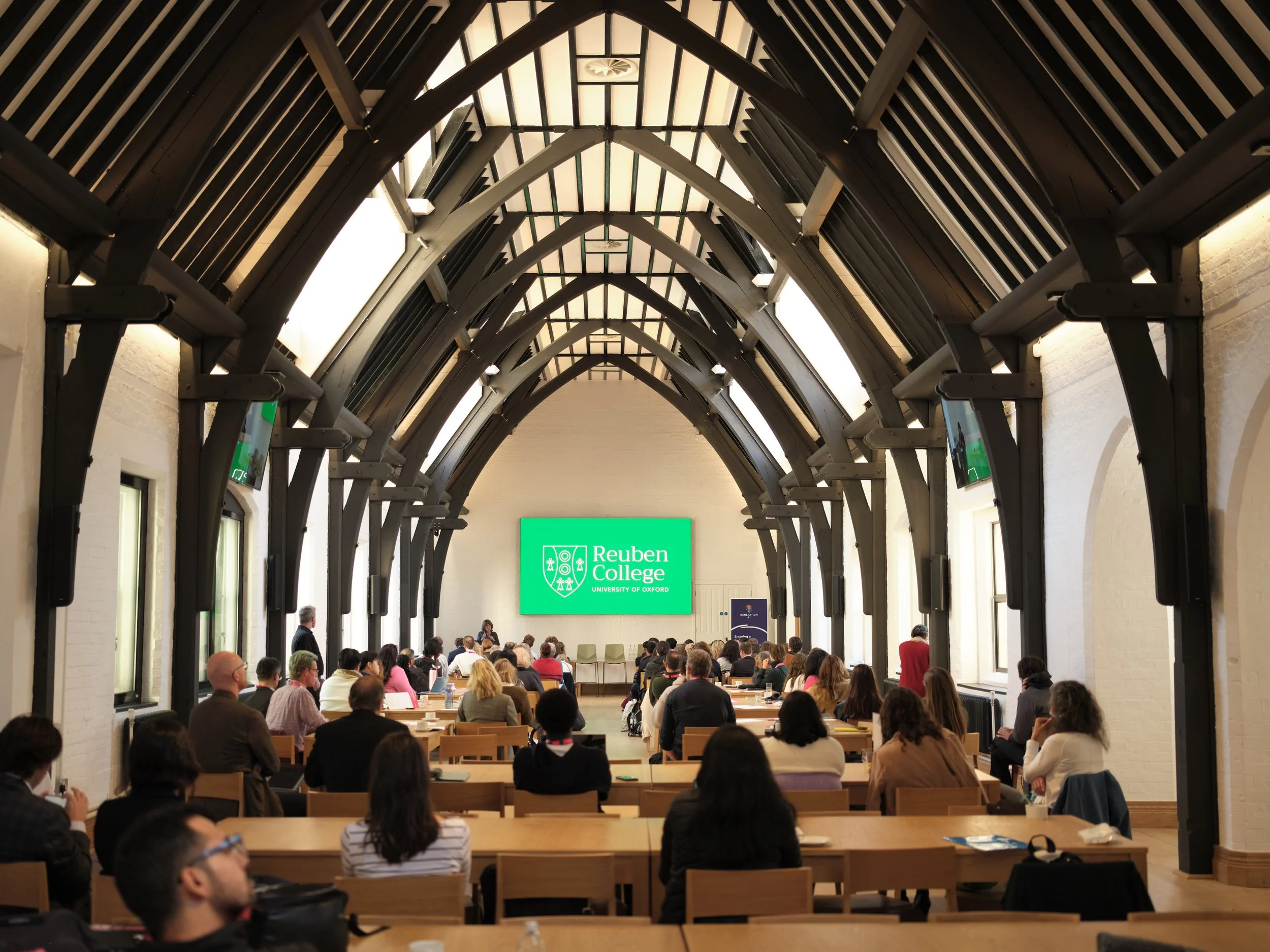
Why we established the prize
AI tools are being deployed directly and indirectly in a huge array of contexts from education to mental health care. However, there is very little evidence for the efficacy or safety of such systems.
This scarcity of high-quality evidence regarding the impact of AI on learning, growth, and development of young people poses a real challenge. One which must be addressed urgently to inform policy, identify risks, and support developers to make evidence-informed design decisions.
What is the Prize?
The prize aims to highlight and promote world-class outputs from researchers around the world, whether within the academy or industry.
Up to 5 prizes of GBP £500 each will be awarded to applicants whose submission demonstrates impact, methodological rigour, and novelty. Applicants are welcome to apply individually or in a group of up to 3 people. While we welcome researchers at all career stages, we particularly encourage submissions from early career researchers.
Showcase your work
Visit the UK
House of Lords
What you could win
£500
How to apply
In order to be eligible to enter this competition, applicants must meet the following criteria
Over the age of 18
Must not be resident in a country currently sanctioned by the UK government
We are interested showcasing empirical research studies addressing the risks or benefits AI poses to young people across various dimensions, including but not limited to:
Agency
Autonomy
Self Determination
Cognitive offloading
Critical thinking
Epistemic distortion
Learning
Skill mastery
Persistence
Resilience
Relationship development (romantic, friendships, caregiver)
Social skills
This is a non-exhaustive list and we welcome applications addressing other aspects of AI’s impact on child development, wellbeing and learning.
To be considered favourably, submissions will be judged on the following criteria:
Outcome focused. We encourage submissions which utilize methods that aim to understand causal relationships, intermediate or proxy indicators, and important, measurable outcomes. Research must be sufficiently developed to have yielded qualitative or quantitative data. Meta-analyses of existing work will not be considered. Work does not necessarily need to be published in a peer-reviewed journal and preliminary outcomes are acceptable.
Impact oriented. We are keen to celebrate which has a real-world application, for example, toolkits and infrastructure to facilitate evidence generation.
Interdisciplinary. We are particularly interested in work which spans typical disciplinary silos and engages diverse stakeholders.
Methodological rigour. Submissions should adhere to the highest standards of evidence, ethics, and research practice.

Competition timeline
Launch
28th September 2026
Deadline for Submissions
13th November 2026
First Round Screening - Notification of Outcome
(If you are successful at this stage we may ask you to provide supporting information for your submission)
20th November 2026
Submissions will be reviewed by an expert panel including members of our international advisory board.
Up to five winners will be selected and contacted
14th December 2026
Winners will present their work at an online showcase event
Networking event for winners at the House of Lords
Early 2027
Winners will be announced via our website and social media channels
21st December 2026
How to Apply
Read our Privacy Statement and Data Protection information
Read the competition Terms & Conditions
Complete the application form by 13th November 2026.